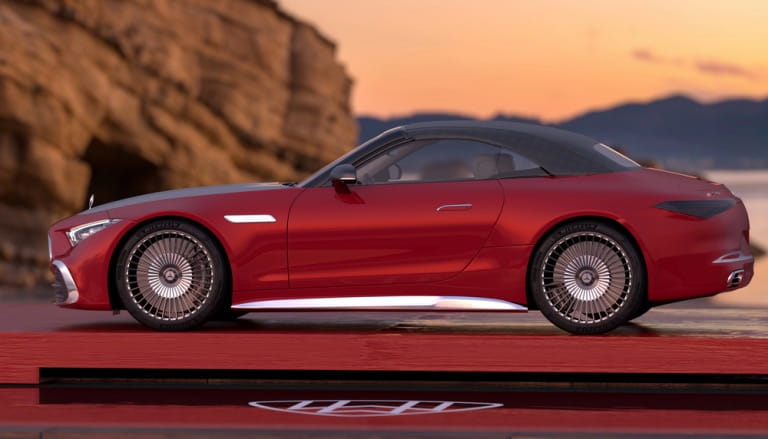
Parking your luxury car outdoors isn’t just inconvenient – it’s a slow fight against a handful of relentless threats that most owners underestimate until the paint shows the damage. Sun, bird droppings, tree sap, and airborne pollution don’t care about your lease terms or your paint job. They work on your clear coat every single day.
What’s Actually Attacking Your Paint Every Day?
Sunlight may not seem dangerous at first glance, but UV radiation is a real threat to your clear coat. It gradually breaks down the polymers, degrading the finish long before any immediate visible damage is seen. In other words, by the time you notice things looking a little off, it’s already too late. The damage will have become visible, and no amount of elbow grease on the polishing wheel will ever be able to restore what’s already disappeared.
Bird droppings are a bigger problem than most people expect. The acid in the uric acid is so potent that it can begin eating into clear coat in a matter of hours in hot weather. And once it becomes chemically bonded to the paint layer, you can wipe all you like – the damage is under the surface and won’t budge. Same for tree sap, which hardens quickly, bonds to the clear coat, and often requires fairly forceful detailing to shift and can easily lead to scratches in the process.
Then there’s fallout: industrial fallout, acid rain, and the kind of metal shavings you’re familiar with from brake dust, or when someone grinds some steel nearby. That makes it over to your parked car, where it slowly oxidizes into a deposit that regular washing won’t remove. Add hail, and you’ve got the full list of stuff that doesn’t care how carefully you drove or whether you park in the garage.
Why A Cover Is The Foundation, Not An Accessory
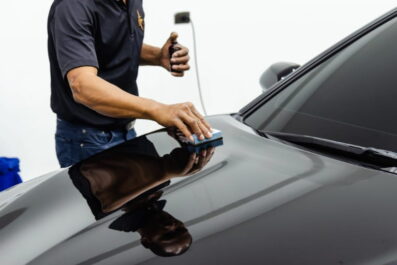
Many luxury car owners choose to coat or wax their vehicle and assume that they’re protected. Technically, a coated and/or waxed car is not fully protected. Ceramic coatings work by making the surface more slippery and therefore reducing the chance of staining. Wax and synthetic sealants add an extra layer of protection. However, none of these options block UV rays, chemical stains, water stains, and bird droppings from the car surface. In the end, they protect your paint job by giving contaminant particles less space to grip onto your car’s paint job.
A car cover, on the other hand, provides a physical barrier between your car and the environment and keeps practically anything from reaching your car’s paint job. This is exactly the kind of protection you get from BMW car covers built for specific model lines rather than sold as one-size-fits-most. A cover can save you plenty of unnecessary clean-ups.
The Scratch Myth, And Where It Actually Comes From
The primary objection people raise against using car covers is that they are likely to scratch the car’s paint. This is not an unreasonable objection, but it’s one that’s generally based on people having used the wrong kind of car cover rather than a car cover in general.
Typically, universal cheap car covers are constructed using one stiff material with no soft backing to protect the paintwork. It’s this material that causes scratching as it moves with the wind. It’s rubbing against the paintwork. Plus, if there’s dust or dirt caught underneath the cover, this movement is essentially sanding the car’s paint as it moves. This is why car covers have gained a reputation for scratching the paintwork. Again, it’s a reputation that’s well deserved, but it only applies to this class of car cover.
High-quality car covers offer real value. A multi-layer model precisely tailored to your car will run from $200 to $300 in most cases. A cotton or flannel fleece single-layer dust cover for temporary in-garage storage will be less than $100. Paint correction starts at around $500 for a full polish to remove scratches and can easily run over double that amount. Fixing paint can be a pain, but cutting down the reasons scratches appear in the first place is simple: cover the car with something that protects it and protects itself.
A custom-fit cover keeps the paint perfect because it stays put. Covers flop and billow because they’re not snug around the sharp corners and tight curves that make modern cars look great. Anything that gets caught between the cover and the paint – dirt, sap, a random leaf – gets rubbed against the paint by the motion of the cover. Given the chance, that motion will also force an abrasive particle into the paint as a scratch. If the cover is loose enough to shift in wind, it will create a hole clean through the paint at the friction point. At that point, it’s not the cover that’s scratching the paint, it’s you grinding the cover into the paint.
Covers, Coatings, And PPF Aren’t Competing Products
However, this doesn’t mean that ceramic coating or paint protection film is wasting money if you have a cover. They protect against different aspects of wear and tear. In fact, the best setup for outdoor protection is to have all three.
Paint protection film acts as armor in the most vulnerable areas such as the front bumper, mirror caps, and leading edges of the hood which are most susceptible to rock chips and road debris. A ceramic coating puts a slick, hydrophobic layer over the paint making it easier to wash contaminants off and gives the paint additional resistance to chemical damage from things like sap or fallout. A cover then deals with what a coating or film can’t handle, like UV exposure, bird droppings, hail, and debris settling directly onto the surface for hours or days.
Coating without a cover still leaves paint fully exposed to the sun and acid. A cover without coating leaves paint exposed during the hours you drive while it is uncovered. Layered together, each product covers for the other’s blind spot, and the whole becomes way more effective than any one you choose to apply on its own.
A Realistic Routine For A Car That Lives Outside
Protection will only be good if the practices supporting it are good. Some practices are very effective over time at preserving a finish.
Dust or wipe down body panels before the car is covered. Grit that gets trapped underneath a cover is the number one source of paint marring, whether you’ve invested in a tailor-made cover or just a tarp, so take a few moments to run a microfiber duster over the surface before you throw the cover on and you’ll eliminate most of the risk.
Wash the car using the two-bucket method instead of the typical single-soapy-bucket-and-hose. One bucket of freshwater contains your soapy cleaning solution, while the other bucket of plain water is used to rinse the wash mitt before it’s dunked back in the hot, soapy stuff. It’s the grit that’s already on the wash mitt re-entering the paint job that’s inflicting all of those light swirl marks in cars that are regularly washed and covered.
Air the cover out for a few hours occasionally rather than keeping it on full-time for days or weeks without a break. Even breathable weaves will benefit from a little fresh air once a week or once every two weeks, and a few hours in a garage with the windows cracked is all you really need. This is especially important if the garage is particularly humid.
Partial Shelter Creates Its Own Problems
Carports, pop-up canopies, and parking under a shade tree might seem like reasonable compromises, and for just overhead sun they do help. But each has a compromise a full cover doesn’t.
Carports and canopies block the overhead but give up the sides. So, wind-driven rain, dust, and fallout still find your paintjob, and quality covers are very heavy in the wind for a reason – few of the cheap ones you see in yards and parking lots would be standing after a good squall. Trees block maybe a quarter of the UV but then you’ve got tree sap and bird junk contributing to the destruction, and those are acid-based which will eat in much faster than direct sunlight.
A good UV-resistant car cover pretty much cancels out all of these negatives. A pop-up/half-cover solution will for sure have at least one issue.
The Math Is Easier Than It Looks
The average new car transaction price in the U.S. was roughly $48,334 in late 2023 (Kelley Blue Book / Cox Automotive). Premium models routinely sit well above that. A full respray to correct sun damage, etched droppings, or hail dents can run into the thousands, and that’s before factoring in the hit to resale value – paint condition is the fastest visual signal buyers use to judge how well a car’s been kept.
A top-tier tailored cover costs a small fraction of that, often close to 1% of the car’s value, as a one-time or occasional purchase that protects the finish year-round. Framed as insurance against a five-figure repair or a diminished resale price, it’s not a hard decision.
What To Check Before You Buy?
There are a few finer points to distinguish between a car cover and an overpriced blue tarp:
Make sure it’s cut specifically for your make and model, not one of those semi-custom sizes. The more damp the climate, the more breathable and moisture-wicking you need the fabric to be. It should have double-stitched, reinforced seams in the panels and a soft inner lining along the entire surface. Also, make sure there’s a warranty. That kind of assurance is a pretty good indicator of the quality of the stitching and material.