
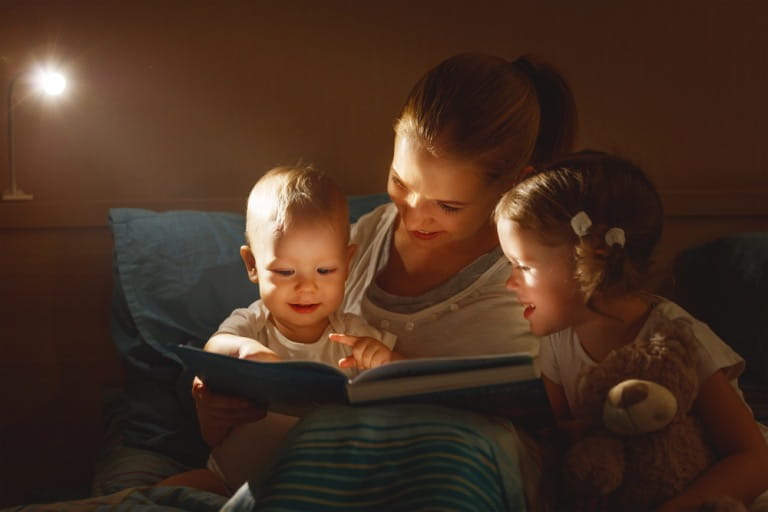
Reading a story with a child every night helps with vocabulary and early reading, and it also gives the child a regular stretch of time with an adult who isn’t rushing off to the next task. Apart from the reading skills, the routine itself does much of the work, since a few minutes with the same person at the same point in the evening builds habits and feelings that last well after the final page.
A Signal That the Day Is Ending
Hearing a story at the same time each night gives a child a cue that it’s time to sleep, and the quiet, predictable pace helps them wind down after the day. The same book in the same voice helps a child’s body slow down before the light goes off, and keeping screens out of that last half hour makes the change into sleep gentler.
The same routine can help when a child first moves in with a foster family. Carers looking after a child placed through Foster Care Associates in the East Midlands might read the same short book at the same time each evening for the first few weeks, because repetition gives a child who is new to the house something familiar to hold onto.
Time With an Adult Who Is Listening
One-to-one attention is hard to come by in a busy household, and a bedtime story provides a set time when the phone is down and the adult’s attention stays with the child. Children sometimes use that quiet to mention something from school or to say what’s on their mind, and the book gives them an easy way in.
What Children Pick Up Besides Words
Empathy: Following a character through a hard moment encourages a child to think about how someone else feels, and a short bedtime reading routine has been linked to growth in empathy and creativity in young children. Talking about what a character did, and why, gives that thinking room to grow.
Vocabulary: Stories introduce words that rarely come up in everyday chat, like enormous or grumpy, and hearing them in context lets a child pick up their meaning before they see them written down. Pausing to explain one new word each night is plenty, and there’s no need to quiz the child.
Talking about feelings: Picture books give children names for jealousy, worry or excitement, and a child who has heard those words in a story tends to find them easier to use when something similar happens in real life. Asking how a character might be feeling is enough to start that conversation without putting the child on the spot.
Keeping the Habit Going as Children Grow
Children who can read for themselves still enjoy being read to, so there’s no need to stop when they start school. Taking turns, with the adult reading one page and the child the next, builds confidence, and chapter books suit this well because the story carries on each night. Pick a book this week and fix a time that suits the household.